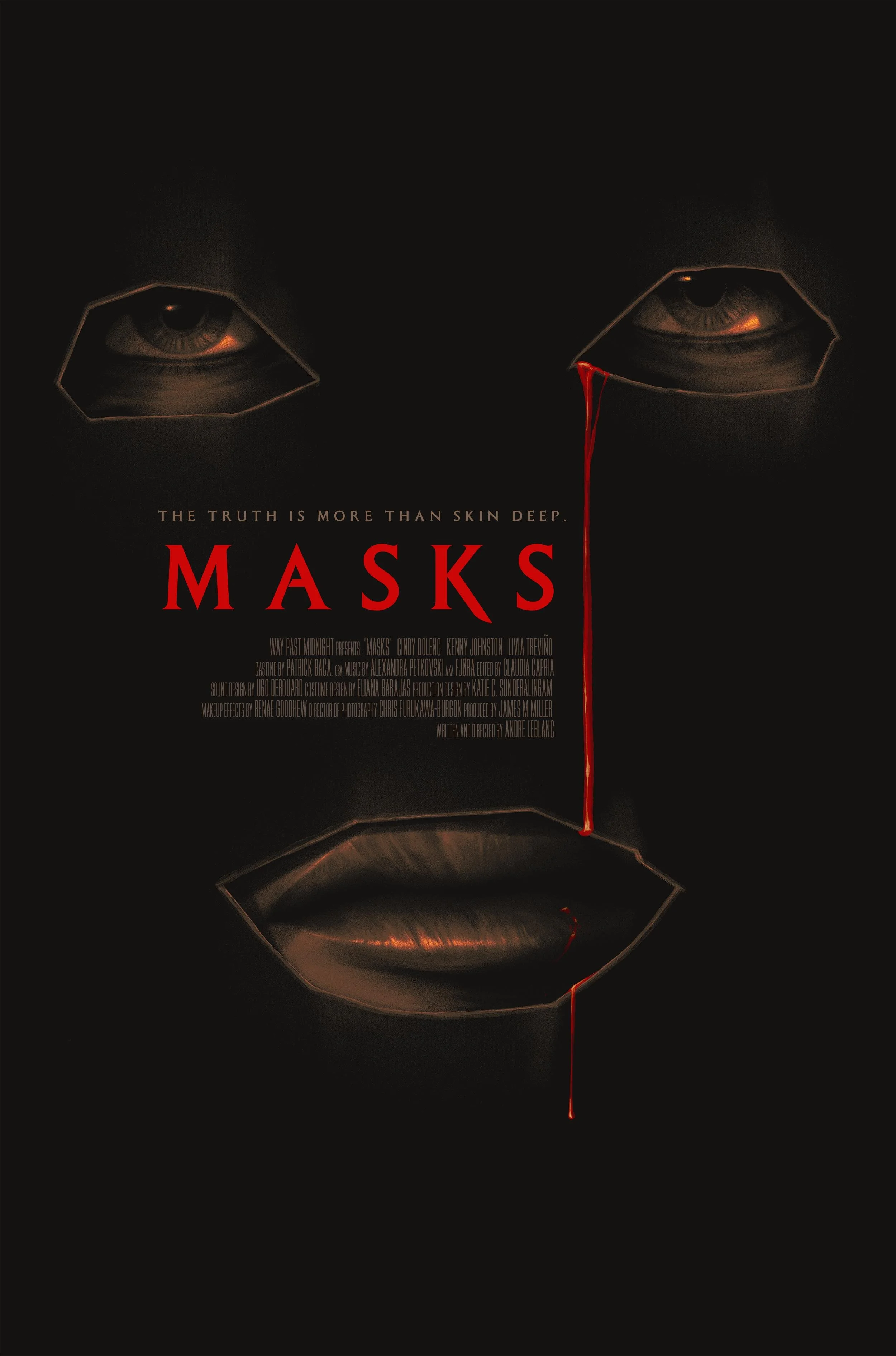
Designing for Discomfort
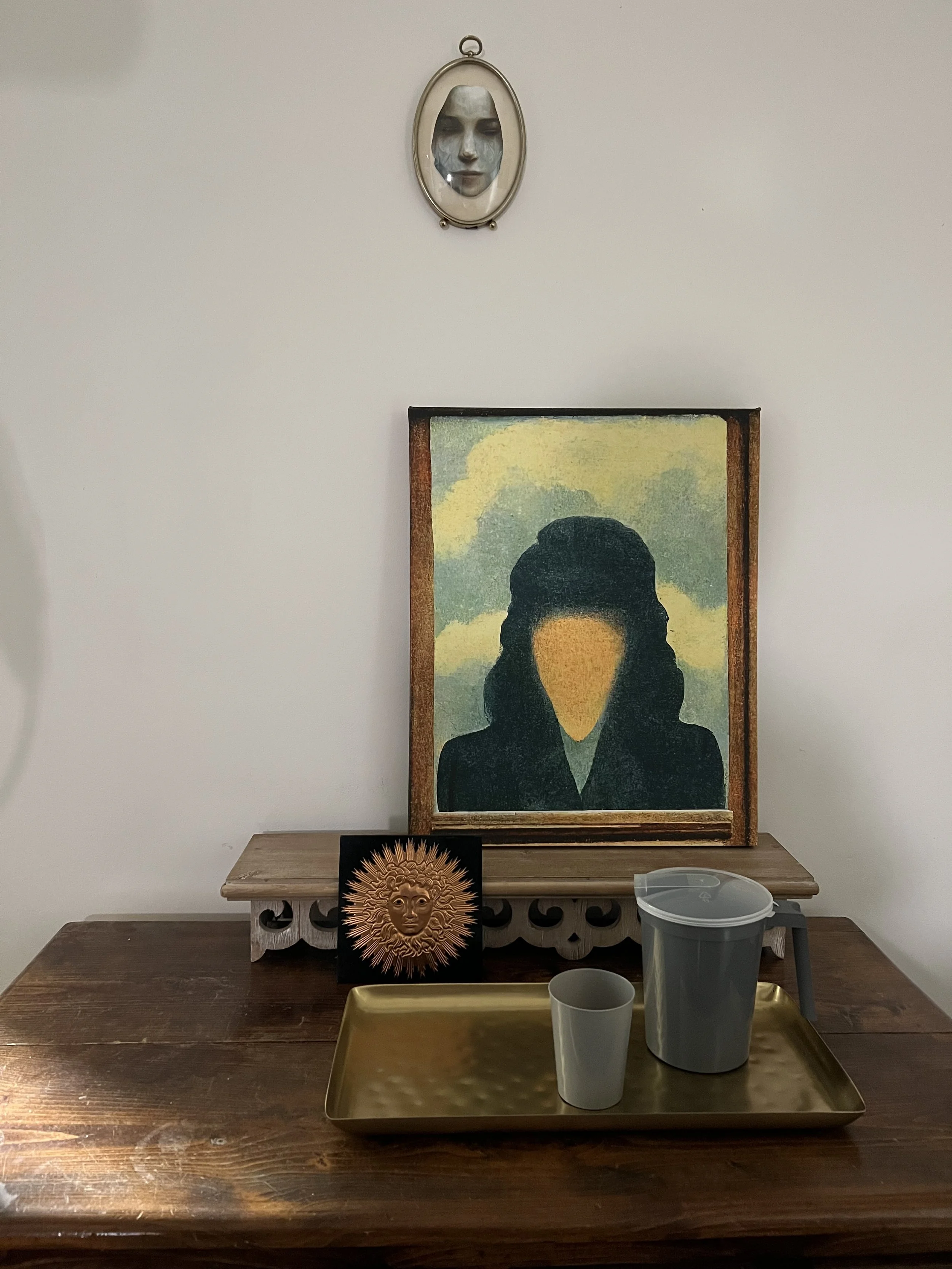
This project allowed an experimental foray into AI-generated artwork. Director Andre LeBlanc had early access to image-generation tools that, at the time, were still largely in the hands of specialists. He asked me to provide references of artists, themes, tonal direction, which he then translated into a series of eerily compelling visuals.
My usual approach would be to create original painted works for set dressing, so this felt like a departure, but not a replacement. At that stage, AI felt like an additional layer, a story telling tool and a way to introduce something subliminal. The characters carried a quiet richness, beyond the more obvious darkness, suggesting histories of travel, culture, and lived experience.
The project itself, Masks, is another beautifully unsettling short from Andre. The story called for a bleak, restrained interior, a space that could hold the weight of two parents grieving the loss of a child.
The reference imagery was sleek and minimal, but the chosen location was a warm, lived-in family home. Translating the vision meant carefully stripping back every layer of personality, removing anything that spoke to comfort, love, or family life, until the space felt intentionally hollow - the kind of transition the characters themselves and their home would have been through.
While dressing the set, we removed a child’s drawing from above the fireplace, only to reveal a large section of missing marble tile beneath. With no time for a formal scenic fix, I improvised: a torn piece of paper, black and white acrylic paint, and a brown furniture marker blended into a mottled base. I added marble veining with a fine pen, and suddenly we had a convincing camera ready patch. It may have been small, but these are the details that stick with me and ultimately build a picture that can be absorbed without interruption.
We restored the home to its original state at wrap, leaving behind the very low-tech marble “upgrade.” I like to think it’s still there, hopefully unnoticed, unless by a particularly observant (perhaps disgruntled) young artist has noticed it!